

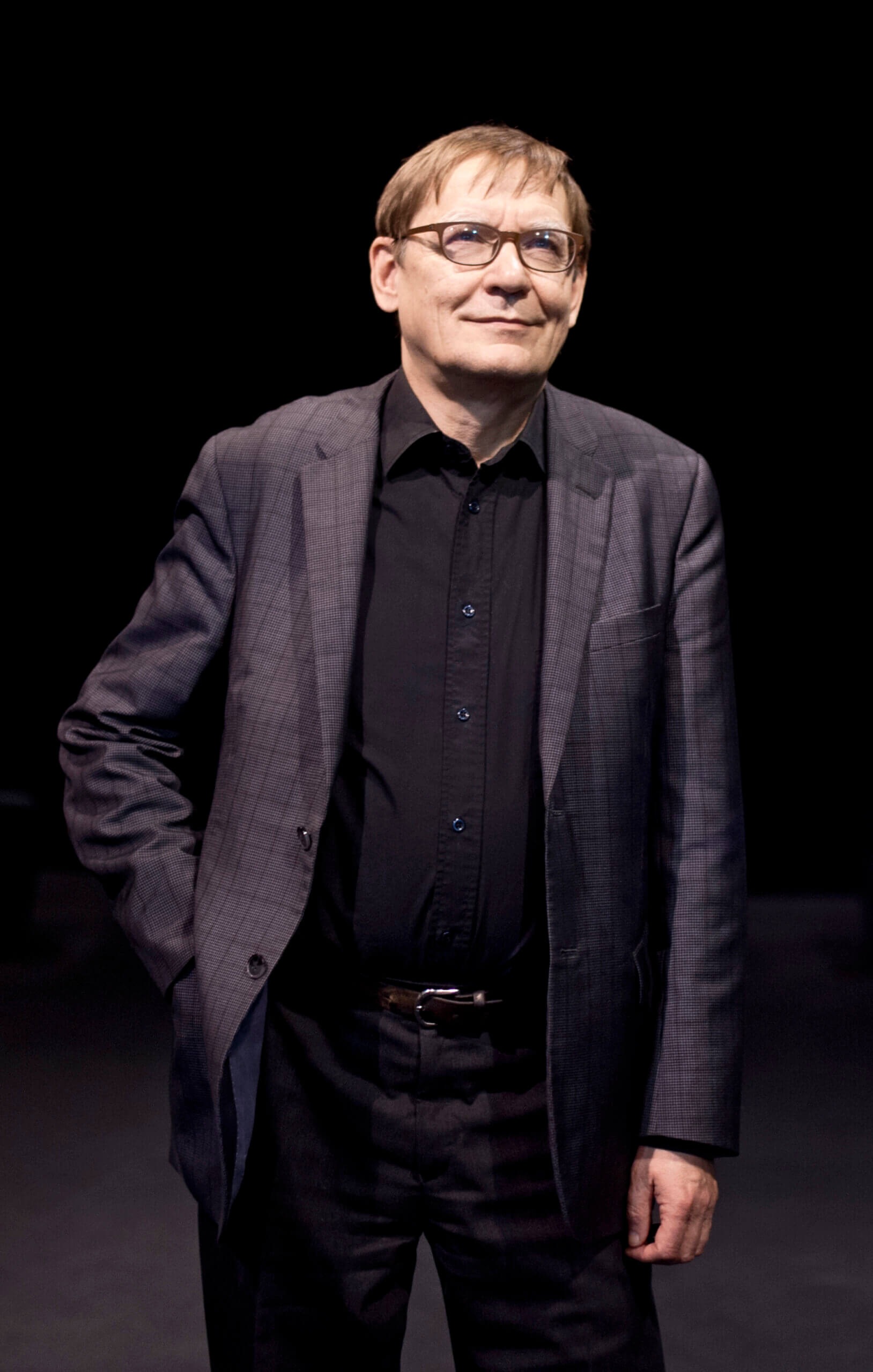
Aho, Kalevi
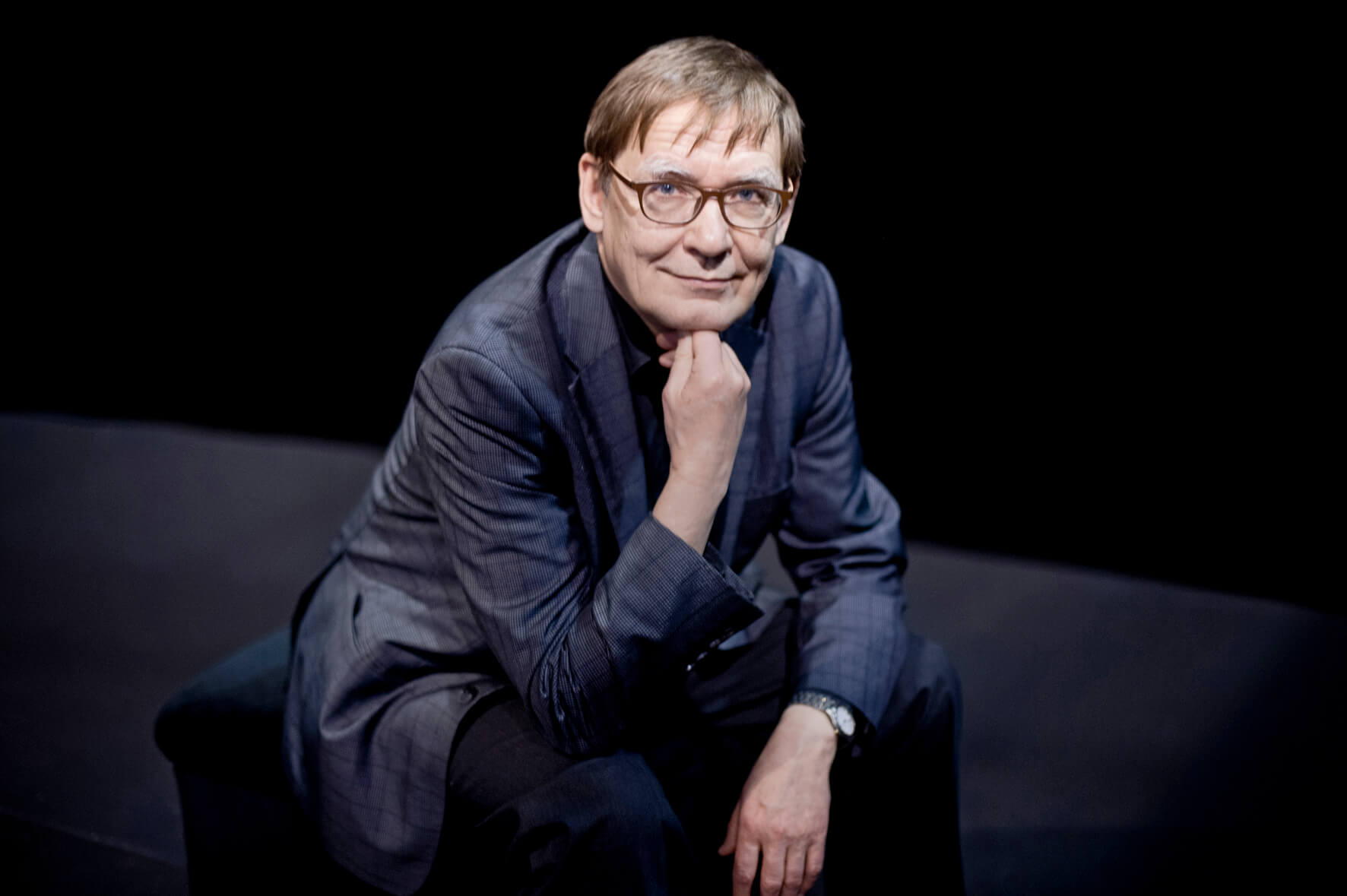
Kalevi Aho, one of Finland’s leading composers of today, was born in Forssa in southern Finland on 9th March 1949. He studied at the Sibelius Academy in Helsinki under Einojuhani Rautavaara and in West Berlin in Boris Blacher’s composition class. In the years 1974-1988 he was a lecturer in musicology at Helsinki University; from 1988 until 1993 he was professor of composition at the Sibelius Academy and since the autumn of 1993 he has been a freelance composer.
In the works which marked his breakthrough (the First Symphony, 1969, and Third String Quartet, 1971) Aho continues in the tradition of Shostakovich; even in these pieces, however, he arrived at a very original formal/dramatic decision. Thus, in the four-movement First Symphony, we are gradually drawn ever further away from the “existing reality” of the beginning, ultimately reaching the third movement’s strange, pseudo-baroque style, and finally, in the last movement, we can meet the problems of the “true reality” head on. The structural starting-point for the single-movement Second Symphony (1970/95) is a triple fugue. In the four-movement Third Symphony (1971-73) the dramatic tension is different; it is a conflict between an individual (a solo violin) and the sound blocks of the orchestra; there is a similar conflict in the pessimistic Cello Concerto (1983-84). The culmination of Aho’s first period (approx. 1969-74) is the three-movement Fourth Symphony (1972-73) with videly varied emotional contrasts.
The Fifth Symphony (1975-76) marks a turning point in Aho’s output. From a structural point of view this massive work is extremely complicated; in this multi-layered symphony, instead of polyphony between various individual instrumental voices, we hear a polyphony of different, independent musical strands. The virtuoso and colourful Sixth Symphony (1979-80) concludes a sequential line of development in Aho’s symphonic work; after this, the composer concentrated for a while on concertos and operas.
Aho’s first opera, Avain (The Key, 1978, with a libretto by Juha Mannerkorpi) tells of the paranoid alienation of an inhabitant of a big modern city in the estranging social climate of today. In 1982 and 1984 The Key was also performed by the Hamburg State Opera. In the years 1985-87 Aho wrote his sharply satirical second opera Hyönteiselämää (Insect Life), which combines elements both of comedy and of tragedy (the libretto, by the composer himself, is based on a play of the same name by Josef and Karel Capek) and contains numerous stylistic parodies as well as pointed social criticism. The work was premiered with great success by the Finnish National Opera on 27 September 1996. Drawing on material from the Insect Life, Aho composed his Seventh Symphony in 1988: a six-movement, cheerful work, the “Insect Symphony” has been described as a post-modern, tragicomic anti-symphony. Two years later Aho composed Pergamon for four narrators, four orchestral groups and organ; the text, which is in four languages, is based on Peter Weiss’s novel Die Ästhetik des Widerstands. In the intense Chamber Symphony No. 2 for strings (1991-92) we hear, in a sense, the music of the composer’s inner voices.
In 1992 the Lahti Symphony Orchestra appointed Aho as its composer in residence, and he has written all of his more recent orchestral works for these musicians. The bright, single-movement Symphony No. 8 (1993) for organ and orchestra is Aho’s most expansive instrumental work; this musically wide-ranging piece is one of the fundamental cornerstones of Aho’s entire output. The lighter Symphony No. 9 (1993-94) is also a concertante symphony: in this work, which contains many different time strata, the solo instrument is the trombone. The large-scale, dramatic Tenth Symphony (1996) is like a tribute to the great Romantic tradition of symphonic music, and is quite different from the Eleventh Symphony for six percussionists and orchestra (1997-98), which is dominated by strong, hypnotic rhythms and by subtle tonal colours.
The song cycle Kiinalaisia lauluja (Chinese Songs, 1997) for soprano and orchestra is a setting of ancient Chinese love poetry. Soloistic virtuosity is a hallmark of Aho’s large-scale, symphonic concertos for violin (1981), cello (1983-84) and piano (1989), of his three chamber symphonies (in the last of these the solo instrument is the alto saxophone) and of many chamber pieces (e.g. the Oboe Quintet, Bassoon Quintet, Oboe Sonata, Quintet for Alto Saxophone, Bassoon, Viola, Cello and Double Bass, Quintet for Clarinet and String Quartet, Epilogue for trombone and organ, Seven Inventions and Postlude for oboe and cello and Quintet for Flute, Violin, Two Violas and Cello).
Aho’s other operas include the one-act Salaisuuksien kirja (The Book of Secrets, 1998) to a libretto by Paavo Rintala and the two-act Ennen kuin me kaikki olemme hukkuneet (Before We All Have Drowned, 1995/1999), the libretto of which is based on a radio play by Juha Mannerkorpi. In 2013 Aho wrote his fifth opera Frida y Diego to the libretto by Maritza Núñez. The opera was commissioned by the Sibelius Academy and premiered on 17 October 2014 in Helsinki. It tells, in Spanish, about turning points in the lives of Frida Kahlo, her husband Diego Rivera, and Lev Trotsky, an exile in Mexico. In the opera the atmosphere varies from dreamy to wild carnival moods and there is also some heated argument and sharp political parody.
Kalevi Aho has composed 18 symphonies in all. They include Symphony No. 12, “Luosto” (2002-03), designed for outdoor purposes, Symphony No. 13 subtitled “Symphonic Characterizations” (2003), Symphony No. 14 “Rituals” for darabuka, djembe, gongs and chamber orchestra (2007), Symphony No. 15 (2009-10) commissioned by the BBC Philharmonic and the Lahti Symphony, and Symphony No. 16 commissioned by YLE and premiered by the Finnish Radio Symphony Orchestra in 2015.
Symphony No. 17 was premiered in 2019 by the Sinfonia Lahti, under the direction of Dima Slobodeniouk. Subtitled Symphonic Frescoes, with its 63 minutes, it is s Aho´s longest, and the movements – From the Depth, Scherzo macabre and Distant Songs – can also be performed separately as independent tone poems. Symphony No. 18 was a co-commission by the Saimaa Sinfonietta combined orchestra, and the first performances took place in Mikkeli and Lappeenranta in February 2024 under the direction of Erkki Lasonpalo.
Among Aho’s many orchestral works are Minea (2008, commissioned by the Minnesota Orchestra) and Gejia – Chinese Images for Orchestra (2012, commissioned by the National Centre of Performing Arts in Beijing, China).
During the 90s Aho concentrated primarily on opera, symphonies, chamber music as well as instrumental solo pieces, and his concerto production was not resumed until the beginning of the new millennium with the elegiac and cantabile Tuba Concerto (2000-01). It was also at this time that the absolutely unique idea of composing a series of concertos for every instrument in the symphony orchestra was born. In 2002 followed one of the key works in Aho’s production, the lyrical and melodious Flute Concerto written for Sharon Bezaly; it one of his most often performed works. After that followed concertos for double bass, clarinet, bassoon, viola, trumpet, trombone and French horn.
Kalevi Aho has also composed concertos for such less usual solo instruments as the tuba, the contrabassoon, the soprano saxophone, the tenor saxophone (listen to Esa Pietilä’s insights about the concerto), the timpani, the harp, the accordeon, the recorder and the baritone horn. His most performed concerto is Sieidi (Concerto for Percussion and Orchestra, 2010) commissioned by the London Philharmonic Orchestra, the Luosto Classic Festival and the Gothenburg Symphony Orchestra and performed by Colin Currie (listen to the LPO/Colin Currie podcast about the concerto). Later also percussionists Martin Grubinger and Alexej Gerassimez have performed this work. The Theremin Concerto Eight Seasons (2011) was commissioned by the Lapland Chamber Orchestra and premiered in 2012 by Carolina Eyck. The recording of Aho’s theremin and horn concertos won the prestigious ECHO Classic Award in 2015 for the best concerto disc of the year. Kalevi Aho’s oeuvre also includes double concertos (for two cellos, for English horn and harp, for flute and harp, for two bassoons, for viola and percussion and for violin and cello) and a triple concerto for violin, cello and piano. One of the latest concertos is for kantele (world premiere in Mikkeli in 2024).
Aho has also completed J. S. Bach’s Die Kunst der Fuge, Contrapunctus XIV which exists in versions for string orchestra, organ or saxophone quartet. The Symphonic Dances (Hommage à Uuno Klami) was composed in 2001 as the third act of Uuno Klami’s ballet Pyörteitä (Whirls) and the recording by BIS has scored great international success. Among Kalevi Aho’s numerous arrangements are Mussorgsky’s Songs and Dances of Death for bass and orchestra and the first act of Klami’s ballet Whirls. In 1995 Aho composed the lost second violin parts of all six string quartets by the first Finnish composer of importance, Erik Tulindberg (1761-1814), and in 1997 he completed Sibelius’s complete Karelia score in preparation both for performance and for recording (BIS-CD-915). Foremost among Aho’s many writings are the treatises Finnish Music and the Kalevala and Einojuhani Rautavaara as a Symphonist, the collection of essays The Tasks of an Artist in a Post-Modern Society, Art and Reality as well as the books Music of Finland (in collaboration with E. Salmenhaara, P. Jalkanen and K. Virtamo) and Uuno Klami – Life and Works (in collaboration with Marjo Valkonen, 2000).
...Freezing were the restless waters
1st movement from Chamber Symphony No. 3 (1995-96)
for string orchestra
str
Duration: 9
Chamber Symphony No. 1
(1976)
for string orchestra
str(65432)
Duration: 13
Chamber Symphony No. 2
(1991-92)
for string orchestra
str(65432)
Duration: 19
Chamber Symphony No. 3
(1995-96)
for alto saxophone and 20 strings
asax-str(65432) I ... freezing were the restless waters 8' II ... oh, I have heard the wild geese call 6' III ... the long nights melt 8' IV ... a scarlet ship is vanishing to the open sea 7' I ... jäätyivät umpeen levottomat vedet 8' II ... ah, olen kuullut villihanhien huudot 6' III ... pitkät yöt sulavat 8' IV ... soutaa avomerta päin tulipunainen laiva 7'
Duration: 29
Chinese Songs
(1997)
for soprano and symphony orchestra
2(II=afl)2(II=ca)2(II=bcl)1-2211-01-hp-str Percussion: Timpani, 5 Tom-toms, Tamburino, Piatti a2, Piatto sospeso, Tamtam, Vibrafono, Campane tubolare 1. Punainen aurinko / The Red Sun (2'30) 2. Miten taipuisa / How Pliable (2'30) 3. Kultainen lintuhiusneula / The Golden Bird’s Hair Brooch (2'30) 4. Yöllä, aivan päihdyksissä / At Night, Intoxicated (4'00) 5. Syksyn tuuli / Autumn Wind (4'30) 6. Lumen keskellä kevään viesti / A Message of Spring Amid the Snow (3'30) Also available for voice and piano (arr. Hannu Bister).
Duration: 20
Concerto for Accordion
(2016)
for accordion and chamber orchestra
0001-0000-str(65432)
Duration: 27
Concerto for Alto Flute
(2021)
for alto flute and string orchestra
str The solo part includes also a passage for bass flute.
Duration: 23
Concerto for Baritone Horn
(2022)
for baritone horn and orchestra
222(II=bcl)2(II=cfg)-2211-12-str Percussione 1: Tamburo piccolo, 5 Tom-toms, Gran cassa, Piatto sospeso, Silofono, Campane tubolari, Triangolo, Claves, Bell tree Percussione 2: Tamburo militare, Tamburino, Piatti a2, Piatto sospeso, 2 Tamtams, Glockenspiel, 2 Wood blocks
Duration: 30
Concerto for Bass Clarinet
(2018)
for bass clarinet and orchestra
2(II+picc)2(II=ca)22-2201-01-str Percussion (1 player): Timpani (min.4, one large for low Db), Snare drum, 5 Tom-toms, Suspended cymbal, Hi-hat, 2 Tamtams (w/ bow), Triangle, Castanets (machine)
Duration: 29
Concerto for Bassoon
(2004)
for bassoon and orchestra
2(I=picc)2(II=oa)22(II=cfg)-322(II=btrb)1-12(or02)-pf(+cel)-str Perc. I: 5 Timpani, Tamburino, Tamtam (grande), Frusta Perc. II: Cassa rullante, 5 Tom-toms, Gran cassa, Piatti à 2, 2 Piatti sospesi (acuto & basso), 2 Tamtams (medio & grande), 3 Blocchi di legno, Donnerblech, Raganella, Frusta
Duration: 37
Concerto for Clarinet
Version for chamber orchestra (2005)
for clarinet and chamber orchestra
111(=ebcl)1-1000-01-pf-str Percussione: Timpani, Gran cassa, Hi-hat, 2 Tamtams (medio & grande, Gong (grande), Silofono, Vibrafono, Triangolo, Anvil
Duration: 30
Concerto for Clarinet
Version for symphony orchestra (2005)
for clarinet and orchestra
2(I=picc)2(II=ca)2(I=ebcl;II=bcl)2(II=cfg)-3221-barhn-01-hp-str Percussione: Timpani, Gran cassa, Hi-hat, 2 Tamtams (medio & grande, Gong (grande), Silofono, Vibrafono, Triangolo, Anvil
Duration: 30
Concerto for Contrabassoon
(2004-05)
for contrabassoon and orchestra
2(I&II+picc)3(III=hckf)22-asax-4230-02-pf-str Perc.I: Timpani, Tamburino, Tamtam, Raganella, Catene Perc.II: Cassa rullante, 5 Tom-toms, Tom-tom (grande), Gran cassa, Tamburino, Piatti à 2, Piatto sospeso, Tamtam, Catene, Glass wind chimes
Duration: 38
Concerto for Double Bass
(2005)
for double bass and orchestra
22(II+ca)22(II=cfg)-2201-barhn-02-hp-str Percussione I: Timpani, Piatto sospeso (w/bow), Tamtam (grande), Crotali, Glockenspiel, 2 Blocchi di legno, Rombe (=thunderstick) Percussione II: Tamburo piccolo, Cassa rullante, Tom-tom (tenore), 2 bongos, Gran cassa, 2 Piatti sospesi (piccolo & medio), Tamtam, Crotali, Vibrafono, Campane tubolari, Kettenspiel, 2 triangoli, Bow
Duration: 33
Concerto for Erhu
(2024)
for erhu and chamber orchestra
1111-1000-01-cemb-str Percussione: Timpani, Tamburo piccolo, 3 Tom-toms, Gran cassa, Tamtam, Campana di mano, Triangolo I Monologue II Presto III Nocturno. Adagio IV Vivace
Duration: 29
Concerto for Flute
(2002)
for flute (also alto flute) and orchestra
2(II=picc)2(II=ca)2(II+bcl)2-3221-barhn-02-hp-str Percussione: Timpani, Tamburo piccolo, Cassa rullante, Tom-tom (low), Tamburino, Gran cassa, Piatti à 2, 2 Piatti sospesi (large & medium), Tam-tam (medio), Vibrafono, 2 Triangoli, 2 Blocchi di legno, 2 Steel castanets, Glass wind chimes, Lastra
Duration: 31
Concerto for Guitar
(2018)
for guitar and chamber orchestra
1111-1000-str(min.43321)
Duration: 30
Concerto for Horn
(2011)
for horn and chamber orchestra
1(+picc)11(+bcl)1-1000-01-str(min.44331) Percussione: Timpani, Djembe, Gran cassa, Tamtam, Vibrafono, Bell tree
Duration: 27
Concerto for Kantele
(2023)
for kantele, string orchestra and percussion
perc-str Percussion (1 player): Tom-tom (baritono), Tamburino (piccolo), Gran cassa, Piatto sospeso, Campane piccolo, 2 Wood blocks, Glass wind chimes, Flexaton
Duration: 31
Concerto for Oboe
(2007)
for oboe and orchestra
22(I=oa;II=hcklfn)22(II=cfg)-2220-02-hp-str Percussione I: Timpani, Darabuka, Triangolo Percussione II: Djembe, Tom-tom (tenore), Gran cassa, Tamtam, 2 Gongs, Frusta, 2 Handbells (large)
Duration: 32
Concerto for Piano No. 1
(1988-89)
for piano and orchestra
4(I=picc;IV+picc)4(III=ca;IV=hcklfn)4(I=ebcl;IV=cbcl)3(III+cfg)-433(III=btrb)1-barhn-13perc-hp-str Percussion: I: Timpani, Cabaza, Lastra II: Tamburo piccolo, Gran cassa, Campanelli, Vibrafono, 2 Campani di Valamo (2 bright orthodox bells), Tamburino, 2 Triangoli III: Cassa rullante, Piatti, Tam-tam, Campanelli, Silofono, Maracas, Catene, Bell tree IV: 5 Tom-toms, Piatti (à 2), Marimba, Wood wind chimes, Metal wind chimes, Frusta, Sirena
Duration: 32
Concerto for Piano No. 2
(2001-02)
for piano and string orchestra
20 strings (65432)
Duration: 29
Concerto for Piccolo
(2025)
for piccolo flute and orchestra
2222(II=cfg)-231(=brtb)1-barhn-02-hp-str
Duration: 29
Concerto for Recorder
(2020)
for recorder and chamber orchestra
1111-2000-01-str Percussion (1 player): 3 Timpani, Tamburo "antico", 2 Congas, 2 Bongos, Tamburino, Bass drum, Cymbal (on Timpani), Tamtam, Vibraphone Solo recorder: sopranino, contralto, bassetto (F) & basso (C)
Duration: 18
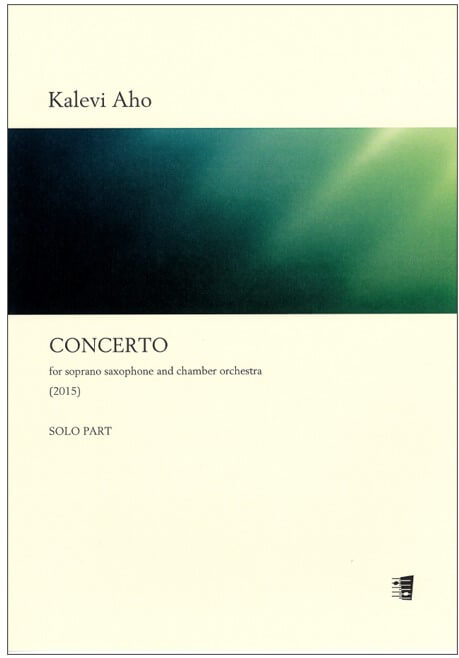
Concerto for Soprano Saxophone
(2015)
for soprano saxophone and chamber orchestra
1(+picc)111-1000-hp-str(43221)
Duration: 28
Concerto for Tenor Saxophone
(2015)
2(II+picc)2(II=ca)11-2000-01-hp-str(min.43321) Percussione: Timpani, Darabuka, 2 Congas, Tamburino, Gran cassa, Tamtam, 2 Triangoli
Duration: 28
Concerto for Theremin
Eight Seasons (2011)
for theremin and chamber orchestra
1(+picc)11(+bcl)1-1000-01-str(44331) Percussione: Timpani, Gran cassa, Piatto sospeso, Crotali, Vibrafono, Campane (in Eb), Shell chimes, Woodstick chimes, Bell Tree, Rain stick, Wind machine
Duration: 34
Concerto for Timpani
(2015)
for timpani and orchestra
3(III=afl)3(III=ca)3(III=bcl)3(III=cfg)-4331-02-hp-str Percussione I: Tamburo piccolo, Cassa rullante, 5 Tom-toms, Piatto sospeso (+arco), Tamtam, Castagnetti, Glass wind chimes Percussione II: Djembe, Gran cassa, Piatti a2, Campane tubolari, Claves, Rain stick Solo Timpani requires 5 drums (D-A, F-c, A-e, c-g, f-h)
Duration: 29
Concerto for Trombone and Orchestra
(2010)
for trombone and orchestra
2(II+picc).2(II+c.ing).2(II+cl.b).2(II+c.fag)-3.2(I,II+flugelhorn).0.1-baritono-0.3-hp-str Percussion 1: Timpani, Tamburino (riqq), Susp.cymbal, 3 Triangles Percussion 2: Susp.cymbal (large), Bass drum, Djembe, Snare drum, Tubular bells, Anvil, Glass wind chimes Percussion 3: Tam-tam, Marimba, Water gong, 2 Congas, Bell tree, gran cassa (can be shared with 2nd percussionist)
Duration: 30
Concerto for Trumpet and Wind Orchestra
(2011)
for trumpet and symphonic wind orchestra
3(I=picc;III=afl)3(II=oa;III=ca)3(I=ebcl;III=bcl)3(III=cfg)-asax-tsax-43(=flghn)31-barhn-03 Percussion: I: Timpani, Tamburino (small), Campane tubolare II: Tamburo piccolo, 2 Congas, Piatti à 2, Piatto sospeso, Vibraphone, 2 Small Hand Bells, 2 Wood Blocks III: 2 Tom-toms, Gran cassa, 2 Tamtams, Marimba (4½ octaves), Flexaton, Bell Tree
Duration: 31
Concerto for Tuba and Orchestra
(2000-01)
for tuba and symphony orchestra
3(I=picc)3(III=ca)3(I+ebcl;III=bcl)3(III=cfg)-4330-barhn-02-hp-str Percussion: I: Timpani, Tamburo piccolo, Tamburino, Tamtam, Frusta, Metal & Shell wind chimes II: Cassa rullante, 5 Tom-toms, Gran cassa, Tamburino, Piatti à2, Piatto sospeso, Tamtam, Incudine, Glass wind chimes
Duration: 29
Concerto for Two Violoncellos and Orchestra
(2003)
for two violoncellos and symphony orchestra
3(I=picc)3(III=ca)3(III=bcl)3(III=cfg)-3221-02-hp-str Percussion: I: Timpani, Tamburino, Tamtam II: Cassa rullante, Gran cassa, Tamburino, Piatti a2, Tamtam, Campane tubolare, 3 Temple blocks, Frusta, Catene, Sistrum, Shell wind chimes
Duration: 20
Concerto for Viola and Chamber Orchestra
(2006)
for viola and orchestra
11(+ca)1(+bcl)1-1000-01-str(min.54331) Percussione: Timpani, Cassa rullante, 4 Tom-toms, Gran cassa, Piatto sospeso, Tamtam, Glockenspiel, Frusta
Duration: 24
Concerto for Violin and Orchestra No. 1
(1981)
for violin and symphony orchestra
3(III+picc)3(III=ca)3(III+bcl)3-3330-barhn-11-hp-str
Duration: 28
Concerto for Violin and Orchestra No. 2
(2015)
for violin and chamber orchestra
22(II+ca)22-2200-barit-1(+perc)0-hp-str Timpani plays also Tamburino, Susp.cymbal, Bell tree
Duration: 33
Concerto for Violoncello and Orchestra No. 1
(1983-84)
for violoncello and orchestra
2(I&II+picc)2(II=ca)3(III=bcl)2(I&II+cfg)-2210-barhn-02-hp-org(+cel)-str Ensemble: asax-tb-perc-acc-mand Percussion 1: Timpani, Tamtam, Campane tubolare Percussion 2: Cassa rullante, Tom-tom, Gran cassa, Piatti, Tamtam, Campanelli, Glockenspiel, Silofono, Blocco di legno, Wood wind chimes Percussion 3 (ensemble): Tamburo piccolo, Gran cassa, Piatto cinese, Maracas
Duration: 30
Concerto for Violoncello and Orchestra No. 2
(2013)
for violoncello and orchestra
2(II=afl)2(II=ca)2(II=bcl)2-2200-barhn-02-str Percussion I: Timpani, Tamburo piccolo, Darabuka, Tamtam, Triangolo, 2 Maracas (small), Glass wind chimes II: Tamburo piccolo, Gran cassa, Bongo, Conga, Piatto sospeso, Glockenspiel, Campane tubolare, Triangolo, Castanets, Bell tree
Duration: 30
Double Concerto for English horn and harp
(2014)
2(II=afl).2(II=oboe d'amore).2(II=bcl).2(II=cfg)-2.2.1.1.baritono-0.2-str Perc. I: Shell chimes, glass chimes, ocean drum, 2 timpani (30’, 25’), tom-tom (tenor) Perc. II: Maracas, gran cassa, piatti sospeso, 2 bongos, Donnerblech, field drum, tam-tam, campane tubolari, metal chimes
Duration: 31
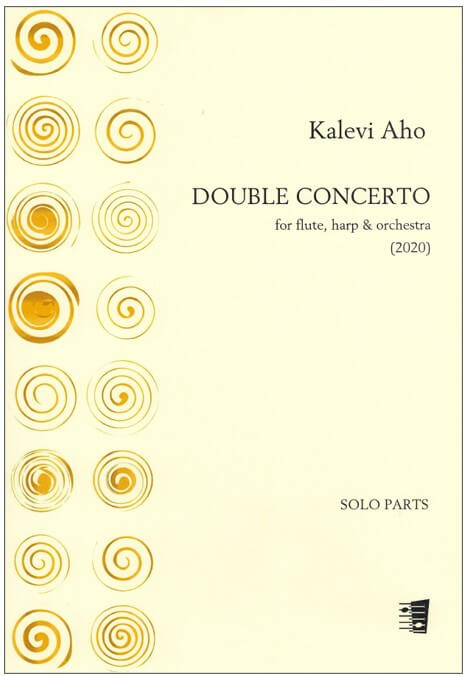
Double Concerto for Flute, Harp and Orchestra
(2020)
1(=afl)2(II=ca)2(II=bcl)2(II=cfg)-2200-02-str Percussione: Timpani (at least 4, one very large for low C#), Tambourine, Tamburo piccolo, Cassa rullante, Gran cassa, Piatto sospeso, Tam-tam, Vibrafono, Glockenspiel, Campane tubolari, Triangle, Waterphone
Duration: 32
Double Concerto for two bassoons and orchestra
(2017–18)
2211(=cfg)-ssax-22(+flghn)01-barit-02-str Percussion 1: Timpani (5), piatto, tamburino, piatto sospeso, piatti à 2, 2 campane di mano Percussion 2: gran cassa, 5 tom-toms, piatto sospeso, campane tubolari, vibrafono, cassa rullante, tamburo piccolo, tam-tam, shell wind chimes
Duration: 29
Double Concerto for Viola and Percussion
(2020)
for viola, percussion and orchestra
2(I,II+picc).2.2.2-2.2.0.1-hp-acc-str Soloists: viola, percussion (mond gong, Waterphone, hang drum, 4 gongs, Rührtrommel)
Duration: 37
Double Concerto for violin & violoncello
(2022)
for violin, violoncello & orchestra
2222-2201(=barhn)-1(+trg)2-hp-str Percussione I: Tamburo militare (Cassa rullante), Darabuka, Gran cassa, Piatto sospeso, Tamtam (shared w/II), 2 Handbells, Bell tree Percussione II: Tamburo piccolo, 5 Tom-toms, Tamburino, Djembe, Piatti a2, Tamtam (shared w/I), Crotali, Vibrafono, Campane tubolari, I Introduzione, Allegretto e Tarantella del diavolo 10'00 II Introduzione, Courante e Presto 8'00 III Introduzione, Canarie e Largo 13'00
Duration: 31
Ennen kuin me kaikki olemme hukkuneet
Opera in Two Acts (1995/1999)
for soloists and orchestra
Libretto by the composer after the radio drama by Juha Mannerkorpi 1(+picc)2(II=hcklf)2(I+ebcl;II+bcl)2(II+cfg)-asax-211(=btrb+barhn)1-01-hp*-electr(=tape)-str Percussion (1 player): Timpani, Field Drum, 5 Tom-toms, Bass Drum, Cymbals a2, Suspended cymbal, Tamtam, Water Gong, Glockenspiel, Marimba, Vibraphone, Campane, 3 Triangles, Bell Tree, Whip, Ratchet *) Harp also plays Tamtam and Iron Bar Soloists: S-Ms-A-T-2Bar-B-2children
Duration: 130
Frida y Diego. Fresco operistico
Opera in Four Acts (2013)
for soloists, mixed choir and orchestra
Libretto by Maritza Núñez 1(+picc)1(+ca)1(+bcl)1-asax-111(+euph)1-02-hp(=celtic hp)-ther-str(4[I+man]4332) Major roles: 1S-1S/Ms-1Ms/A-2A-1T-2Bar-1B Minor roles, Mixed choir Percussion I: I: 4 Tom-toms, Piatti a2, Marimba, Maracas Percussion II: Tamburo piccolo, Gran cassa, Tamburino (pandero), Traqueteo de los niños, Frusta
Duration: 148
Gejia
Chinese Images for Orchestra (2012)
3(I=picc)3(III=ca)3(III=bcl)3(III=cfg)-4331-03-hp-str Percussion 1: Chinese theatre gongs (small and large), Flexaton, Tam-tam, Xylophone, 2 Gongs (medium and large) Percussion 2: 5 Tom-toms, Small (Chinese) theatre cymbals, Snare drum Percussion 3: (Chinese) Bass drum, 2 Wood blocks, 2 Brake drums, Susp.cym (large), Chinese opera drum (small)
Duration: 15
Historical Scenes [Historiallisia kuvia]
(2009)
I Ramus Virens Olivarum (2 tr/2 trbn/tamb) II Allegro Appassionato (string quartet) III Andante lirico (wind quintet) IV Sounds of the Century / Vuosisadan ääniä (1111/1220/perc/str54331)
Duration: 30
Insect Life
Opera in Two Acts (1985-87)
Opera in two acts
Soloists, male chorus, female chorus and orchestra: 32.asax.heck.33/4.barhn.331/timp.3perc/2hp/str/tp
Duration: 165
Kellot
Concerto for Saxophone Quartet and Orchestra (2008)
for soprano, alto, tenor & baritone saxophone and symphony orchestra
2222-2220-02-str(min.87654) Percussion I: Timpani, 2 Tamtams (large), Triangolo, 2 Temple blocks Perc. II: Gran cassa, Piatto sospeso, Glockenspiel, Campane tubolare, Triangolo, 2 Wood blocks, 2 Cow bells (small)
Duration: 28
Kirje tuolle puolen / Letter to the Netherworld
Pehr Henrik Nordgren in memoriam (2018)
for string orchestra
str(min.55432)
Duration: 12
Kysymysten kirja (Book of Questions)
Suite for mezzosoprano and chamber orchestra (2006)
Song cycle for mezzo soprano and chamber orchestra
1(+afl)1(+ca)11-1000-01-str Percussion: 3 Timpani, 4 Tom-toms, Gran cassa, Piatto sospeso, 2 Gongs (medio e grave), Tamtam, Chinese theatre gong, Glockenspiel, Vibrafono, 2 Blocchi di legno, Shell wind chimes Text (in Finnish) by Pablo Neruda, transl. by Katja Kallio
Duration: 28
Clarinet Concerto (I Tempestoso)
Lahti Symphony Orchestra, cond. Osmo Vänskä, sol. Martin Fröst
(BIS Records SACD-1463)
Concerto for Tenor Saxophone and Orchestra (Interlude II and solo cadenza)
Pori Sinfonietta/Jan Söderblom, sol. Esa Pietilä
Flute Concerto (III Epilogue)
Lahti Symphony Orchestra, cond. Osmo Vänskä, sol. Sharon Bezaly
(BIS Records CD-1499)
Sieidi – Percussion Concerto (extract)
London Philharmonic Orchestra, cond. Osmo Vänskä, sol. Colin Currie
Symphony No. 4 (III Lento)
Lahti Symphony Orchestra, cond. Osmo Vänskä
(BIS Records CD-1066)
Symphony No. 7 (III The Butterflies)
Lahti Symphony Orchestra, cond. Osmo Vänskä
(BIS Records CD-936)
Symphony No. 9 for trombone and orchestra (I Presto)
Lahti Symphony Orchestra, cond. Osmo Vänskä, sol. Christian Lindberg
(BIS Records CD-706)
Symphony No. 12 (Luosto)
Chamber Orchestra of Lapland, Lahti SO.cond. John Storgårds
(BIS Records SACD-1676)
Symphony No. 14 (Rituals) (Incantation III, Mantra of the Ending)
Chamber Orchestra of Lapland, cond. John Storgårds, sol. Herman Rechberger
(BIS Records CD-1686)
Symphonic Dances (I Prelude)
Lahti Symphony Orchestra, cond. Osmo Vänskä
(BIS Records CD-1336)
Symphony No. 16 (YLE Areena link)
Finnish Radio Symphony Orchestra, cond. Hannu Lintu, sol. Virpi Räisänen, mezzo-soprano
Symphony No. 7 “Insect Symphony”
Symphony No. 8
Symphony No. 9 (Sinfonia Concertante No. 2)
Symphony No. 10
Symphony No. 13 “Symphonic Characterizations”
Symphony No. 14 “Rituals”
Symphony No. 15
Symphony No. 16
Symphony No. 17 “Symphonic Frescoes”
Silence (Hiljaisuus) for orchestra
Chamber Symphony No. 3 for alto saxophone and string orchestra
Contrapunctus XIV (J.S.Bach) for strings
The Bells (Concerto for Saxophone Quartet and Orchestra)
Double Concerto for violin, violoncello and orchestra
Concerto for Kantele, Strings and Percussion
Concerto for Bassoon and Orchestra
Flute Concerto
Sieidi (Concerto for Percussion and Orchestra)